Wisdom Tooth Removal (Third Molar Extraction)
Safe, Comfortable & Expert Wisdom Tooth Removal for a Healthy Smile
Wisdom teeth are the last set of permanent teeth to erupt, usually between the ages of 17 and 25 years. While some people never experience problems with their wisdom teeth, others may develop pain, swelling, infection, or damage to nearby teeth due to lack of space in the jaw.
At Saket Dental Clinic, Mansarovar, Jaipur, we provide safe and comfortable wisdom tooth removal using modern dental techniques and careful treatment planning. Whether your wisdom tooth is fully erupted, partially erupted, or impacted (stuck inside the jaw or gums), our experienced dental team will recommend the most appropriate treatment after a detailed examination.
If your wisdom tooth is causing discomfort or has been advised for removal, early treatment can help prevent more serious dental problems in the future.
What is a Wisdom Tooth?
Wisdom teeth, also called third molars, are the last permanent teeth to develop. Most adults have four wisdom teeth—one in each corner of the mouth.
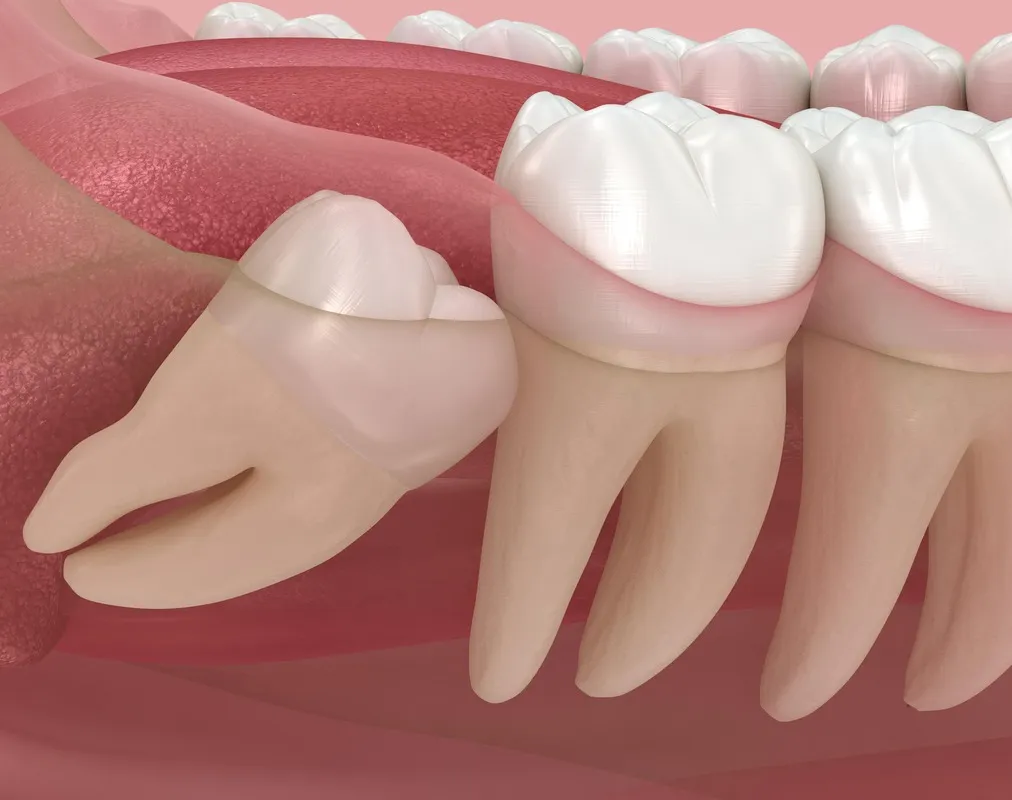
Unlike other teeth, wisdom teeth often do not have enough space to erupt properly. As a result, they may remain trapped inside the jawbone, grow at an angle, or partially emerge through the gums.
Not every wisdom tooth needs to be removed. If it grows in the correct position, is easy to clean, and does not cause any problems, it can often be left in place and monitored during regular dental check-ups.
Why Do Wisdom Teeth Cause Problems?
Modern human jaws are generally smaller than those of our ancestors, leaving less room for wisdom teeth to erupt properly.
When there isn't enough space, a wisdom tooth may:
- Grow sideways
- Push against the neighbouring tooth
- Remain trapped inside the jaw
- Partially erupt through the gums
- Create areas that are difficult to clean
These situations can lead to pain, infection, swelling, tooth decay, and gum problems.
Signs You May Need Wisdom Tooth Removal
You should visit a dentist if you notice:
- Pain at the back of your mouth
- Swollen or tender gums around the wisdom tooth
- Difficulty opening your mouth completely
- Pain while chewing
- Food getting trapped around the wisdom tooth
- Repeated infection around the tooth
- Bad breath or an unpleasant taste in the mouth
- Swelling of the face or jaw
- Decay in the wisdom tooth or the neighbouring tooth
Sometimes, impacted wisdom teeth may not cause any symptoms initially but are detected during a routine dental examination or X-ray.
What is an Impacted Wisdom Tooth?
An impacted wisdom tooth is one that cannot erupt completely because it is blocked by the surrounding bone, gums, or neighbouring teeth.
There are different types of impaction:
- Vertical Impaction – The tooth is upright but unable to erupt fully.
- Mesioangular Impaction – The tooth tilts forward towards the neighbouring tooth.
- Horizontal Impaction – The tooth lies sideways within the jawbone.
- Distoangular Impaction – The tooth tilts backward.
The type and position of the impacted tooth help determine the most suitable treatment approach.
When is Wisdom Tooth Removal Recommended?
Your dentist may advise removal if the wisdom tooth is:
- Causing persistent pain
- Repeatedly infected
- Damaging the adjacent tooth
- Associated with tooth decay
- Causing gum disease
- Contributing to cyst formation
- Interfering with orthodontic treatment
- Difficult to clean and maintain
Not every wisdom tooth requires extraction. Treatment is recommended only when it is likely to benefit your long-term oral health.
Is Wisdom Tooth Removal Painful?
This is one of the most common questions patients ask.
The procedure is performed under local anaesthesia, which numbs the area around the tooth. This means you should not feel pain during the extraction, although you may experience some pressure or movement while the tooth is being removed.
After the procedure, mild discomfort, swelling, or stiffness is normal for a few days and can usually be managed with prescribed medications and proper aftercare.
Our team focuses on making the procedure as comfortable and stress-free as possible while providing clear guidance for a smooth recovery.
What Happens During Wisdom Tooth Removal?
1. Clinical Examination
Your dentist examines your mouth and discusses your symptoms.
2. Digital X-ray
A dental X-ray helps determine the position of the wisdom tooth and its relationship with nearby teeth and important structures.
3. Local Anaesthesia
The treatment area is numbed to ensure your comfort during the procedure.
4. Tooth Removal
Depending on the position of the tooth, it may be removed directly or through a minor surgical procedure.
5. Cleaning the Area
The extraction site is cleaned thoroughly to reduce the risk of infection.
6. Stitches (If Required)
Some cases require a few stitches to help the area heal properly. These may dissolve on their own or be removed during a follow-up visit.
Recovery After Wisdom Tooth Removal
Most patients recover well within a few days, although complete healing of the extraction site takes longer.
To support healing:
- Rest for the remainder of the day after the procedure.
- Apply a cold pack to reduce swelling during the first 24 hours.
- Take medications exactly as prescribed.
- Eat soft foods for the first few days.
- Drink plenty of fluids.
- Brush carefully while avoiding the extraction area.
- Avoid smoking or using straws, as these can interfere with healing.
Following your dentist's instructions helps reduce discomfort and promotes a smooth recovery.
What Should You Eat After Wisdom Tooth Removal?
During the first few days, choose foods that are soft and easy to eat, such as:
- Yogurt
- Khichdi
- Mashed potatoes
- Soft rice
- Soups (not very hot)
- Smoothies (without using a straw)
- Oatmeal
- Scrambled eggs
As healing progresses, you can gradually return to your normal diet based on your dentist's advice.
What Happens If You Delay Wisdom Tooth Removal?
Ignoring a problematic wisdom tooth may lead to:
- Recurrent pain
- Gum infection
- Swelling
- Tooth decay
- Damage to neighbouring teeth
- Difficulty cleaning the area
- Cysts around the impacted tooth
- More complex treatment later
Seeking timely dental care can help prevent these complications.
Why Choose Saket Dental Clinic for Wisdom Tooth Removal?
At Saket Dental Clinic, we understand that many patients feel anxious about tooth extractions. Our team focuses on making every procedure as comfortable, safe, and well-planned as possible.
Patients choose us because we provide:
- Thorough clinical evaluation
- Modern diagnostic technology
- Comfortable treatment under local anaesthesia
- Strict sterilization and infection-control protocols
- Personalized treatment planning
- Clear guidance before and after the procedure
- Compassionate care for every patient
- Convenient location in Mansarovar, Jaipur
Our goal is to ensure that you receive the treatment you need with confidence and peace of mind.
Common Queries:
Does every wisdom tooth need to be removed?
No. Wisdom teeth that are healthy, fully erupted, properly positioned, and easy to clean may not require removal.
How long does the procedure take?
The duration depends on the position and complexity of the tooth. Your dentist will explain the expected treatment time during your consultation.
Will I be awake during the procedure?
Yes. Wisdom tooth removal is usually performed under local anaesthesia, allowing you to remain awake while the treatment area is numb.
How long does recovery take?
Most patients feel significantly better within a few days, while complete healing of the extraction site takes several weeks.
Can I go to work the next day?
Many patients return to normal activities within one or two days, depending on the complexity of the extraction and their individual recovery.
Is swelling normal after wisdom tooth removal?
Yes. Mild swelling and discomfort are common during the first few days and usually improve gradually.
When can I brush my teeth again?
You can continue brushing your teeth, but avoid the extraction site initially and follow your dentist's instructions for cleaning the area.
Can wisdom teeth cause headaches or jaw pain?
In some cases, impacted or infected wisdom teeth may contribute to jaw discomfort or pain that radiates to nearby areas.
Can I keep my wisdom tooth if it isn't hurting?
Yes, provided it is healthy, properly positioned, and not causing damage to surrounding teeth or gums. Regular monitoring is important.
What should I do if my wisdom tooth starts hurting?
Schedule a dental examination as soon as possible. Early evaluation can help identify the cause of the pain and determine whether treatment is required.
Ready to Find Relief from Wisdom Tooth Pain?
A problematic wisdom tooth can affect your comfort, oral health, and daily routine. If you're experiencing pain, swelling, or difficulty chewing, don't ignore the symptoms.
Visit Saket Dental Clinic, Mansarovar, Jaipur, for a thorough evaluation and personalized treatment. Our experienced team will assess your wisdom tooth and recommend the most appropriate solution to help you regain comfort and maintain a healthy smile.