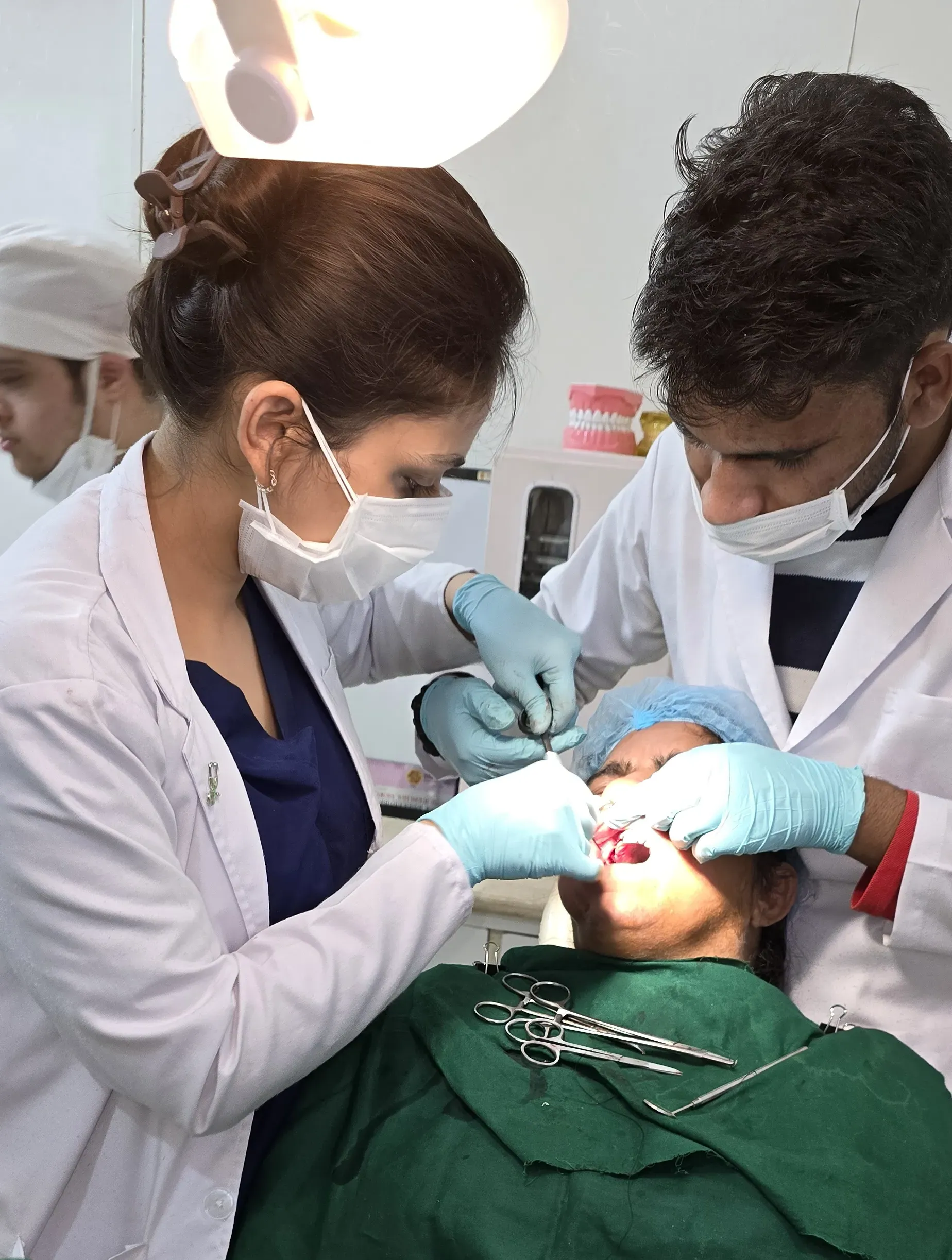
TMJ SURGERIES
TMJ surgery is performed when conservative TMJ disorder treatments fail to alleviate severe pain and joint destruction. Common procedures include arthroscopy (using a scope and small instruments) and arthroplasty (open-joint surgery to reposition or remove the disc). In severe cases, condylotomy (to allow natural repositioning) or total joint replacement may be necessary. Recovery involves pain management, a soft diet for a period, and jaw exercises to improve movement and function.
Types of TMJ Surgery
-
A minimally invasive procedure where a small tube with a camera is inserted into the joint to visualize and treat issues like scar tissue or inflammation.
-
Arthroplasty (Open-Joint Surgery):A more extensive procedure that involves a larger incision to directly access and repair the joint, often to reposition the TMJ disc or remove damaged tissue.
-
A part of arthroplasty where the TMJ disc, a shock absorber in the joint, is repaired or removed if it is severely damaged.
-
Involves modifying the bone of the jaw to encourage the soft tissues to reposition the condyle (the joint's "knuckle") and disc naturally.
-
A last resort for joints that are severely damaged, replacing the joint with prosthetic components.
What to Expect
-
Anesthesia:You will receive either local anesthesia with sedation or general anesthesia.
-
Recovery:Swelling and discomfort are common and usually peak around two days after surgery.
-
Diet:You may be advised to maintain a soft diet for several weeks to avoid stressing the joint.
-
Physical Therapy:Jaw exercises and physical therapy will likely be recommended to help restore range of motion and function.